A Pinch of Grace: The Quiet Revolution of Being Yourself
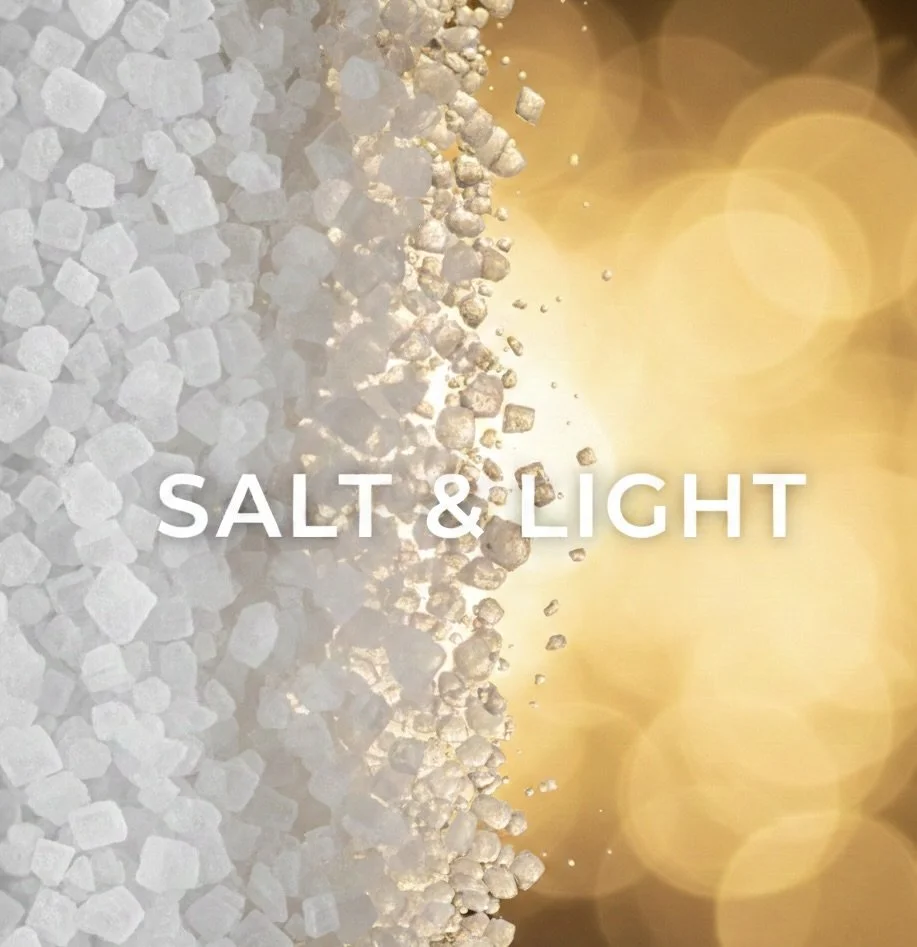
We’ve all had that experience where we sit down for a meal we’ve been looking forward to, only to find it utterly lackluster. Maybe it’s a bowl of popcorn that tastes like air, or a plate of fries missing that essential crystalline crunch of salt. In those moments, we don't just feel hungry; we feel disappointed. Something is missing. The essence isn't there.
Often, our lives can feel the same way—functional, perhaps even "good" on paper, but somehow bland. We moving through our routines like cardboard. It is into this dullness that Jesus speaks a word that is as much an invitation as it is a challenge.
In the Sermon on the Mount, Jesus looks at a crowd of ordinary, weary people—not the religious elite or the political power players—and makes a startling declaration of identity:
“You are the salt of the earth... You are the light of the world.” (Matthew 5:13, 14)
Notice the grammar. He doesn't say you should be, or that if you work hard enough, you might one day become. He says you are.
The Hidden Potency of Salt
Salt is an interesting choice for a metaphor. It is tiny, unassuming, and almost invisible once it’s doing its job. No one sits down to a meal of salt; it exists to bring out the best in everything else.
In the ancient world, salt was a triple threat: it added flavor, it preserved food from rotting, and it made things last. When Jesus calls us the "salt of the earth," he is reminding us that our influence is often quiet but vital. You don't have to be the loudest person in the room to change its temperature.
When you choose kindness in a workplace defined by cynicism, or honesty in a culture of "spin," you are acting as a preservative. You are keeping the world from "rotting" just a little bit longer. Salt works by contact. It has to be in the meat to preserve it. Similarly, our faith isn't meant for a vacuum; it’s meant for the messy, unseasoned reality of our daily lives.
But there is a warning attached: “If salt loses its saltiness, how can it be made salty again?” If we blend in so seamlessly that we lose our distinctiveness—our commitment to love, mercy, and truth—we lose the very thing that makes us useful to the world.
A City on a Hill
Then, the metaphor shifts from the microscopic to the cosmic: Light.
While salt works through hidden contact, light works through visible presence. Jesus points out the absurdity of lighting a lamp only to shove it under a basket. It’s a waste of energy and a denial of purpose.
“Let your light shine before others, so that they may see your good works and give glory to your Father in heaven.” (Matthew 5:16)
This isn't a call to "performative holiness." The goal of the light isn't to make people think we are awesome; it’s to help people see where they are going. When we live with integrity, when we forgive those who don't deserve it, and when we stand up for the marginalized, we aren't showing off—we are pointing. We are illuminating a different way of being human that reflects the heart of God.
From Robots to Hearts
Perhaps the most misunderstood part of this passage is when Jesus speaks about the Law: “I have not come to abolish the law... but to fulfill it” (Matthew 5:17).
For many of us, "religion" feels like a checklist of rules to keep us from getting in trouble. But Jesus is reframing the "rules." He isn't lowering the bar of morality; he’s moving the bar from our external actions to our internal hearts. God was never looking for perfect robots who follow instructions; He was looking for a people whose hearts were so transformed by love that the "rules" become second nature.
Being "technically correct" isn't the goal. Being "salty and bright" is.
A Reflection for Your Week
As you move into the coming days, you don't need to stress about being "religious enough" or famous enough to make an impact. You are already invited into a story where your small, daily choices carry the weight of the Kingdom.
Take a moment today to consider:
Where is the environment "bland" or "rotting" around you? How can a small pinch of your kindness change the flavor?
Is there a "basket" you’ve been using to hide your light—perhaps fear of judgment or a feeling of inadequacy?
How would it change your tomorrow if you believed that you are already the salt and the light, just as you are?
The world doesn't need more cardboard. It needs the flavor and the light that only you, through the grace of God, can provide.